A swollen knee usually means extra fluid or inflammation from overuse, a minor strain, irritation, or an underlying joint issue. Rest, ice, compression, and elevation often help, but sudden swelling, severe pain, fever, or trouble bearing weight should be checked promptly.
I’m Ethan Carter, and I’ve spent years testing massage tools, recovery products, and pain relief methods. I focus on simple, practical advice that helps people feel better and recover faster at home.
If your knee is swollen, it can feel tight, stiff, warm, and hard to trust. Walking may feel awkward. Bending down may feel worse. In this guide, I’ll walk you through the most common reasons it happens, what usually helps at home, when massage makes sense, and when it’s smarter to stop guessing and get medical help.
Quick Answer
A swollen knee often happens because the joint or nearby soft tissue is irritated. That irritation can come from overuse, exercise, a twist, arthritis, bursitis, or extra fluid inside the joint. Many mild cases calm down with rest, ice, compression, and elevation, but severe or sudden symptoms deserve faster attention.
Why a Swollen Knee Matters
What knee swelling usually means
In simple terms, swelling means your knee is reacting to stress. Sometimes that stress is obvious, like a hard workout, a long hike, kneeling a lot, or a twist. Sometimes it builds up slowly, especially if your knee is already dealing with stiffness, joint wear, or repetitive strain.
Many people describe swelling as pressure, puffiness, heaviness, or a tight band feeling around the knee. In some cases, the swelling sits more around the kneecap. In other cases, it feels deep inside the joint.
Common symptoms that often show up with it
- Pain or soreness
- Stiffness when bending or straightening
- Warmth around the joint
- A tight or full feeling
- Reduced range of motion
- Swelling after walking, standing, or exercise
Why Is My Knee Swollen? Common Causes Explained
Overuse, workouts, and repetitive strain
This is one of the most common patterns I see. Your knee may swell after long walks, squats, running, jumping, climbing stairs, yard work, or standing for hours. The knee does not always need one big injury to get irritated. Repetitive load can be enough.
If the muscles around your knee are tight and tired, your mechanics can get sloppy. That may increase stress on the joint and surrounding tissue. Overuse can also make recovery slower, especially if you keep pushing through pain.
Minor twists, bumps, and soft tissue irritation
A small twist, awkward landing, or bump can leave the knee irritated even if there is no major bruise. You might notice swelling later that day or the next morning. This can happen with tendon irritation, soft tissue strain, or joint irritation after a movement that did not feel dramatic at the time.
Arthritis, bursitis, and joint irritation
Swelling can also show up when the knee joint is already irritated by wear and tear or inflammation. Arthritis often brings swelling, stiffness, and reduced movement. Bursitis can create a more localized swollen area, especially around the kneecap or nearby pressure points.
For a medical overview of swollen knee causes and symptoms, I recommend reading Cleveland Clinic’s swollen knee guide.
Tight muscles, poor movement, and recovery overload
Not every swollen knee starts in the knee itself. Tight quads, calves, hamstrings, and hips can change how force moves through the joint. If you sit a lot, train hard without recovery, or move with limited ankle and hip mobility, the knee may end up doing more work than it should.
That does not mean muscle tension is the only cause. It means it can add to the problem and make the knee feel more irritated, stiff, and overloaded.
How Knee Swelling Works in the Body
Inflammation and fluid buildup
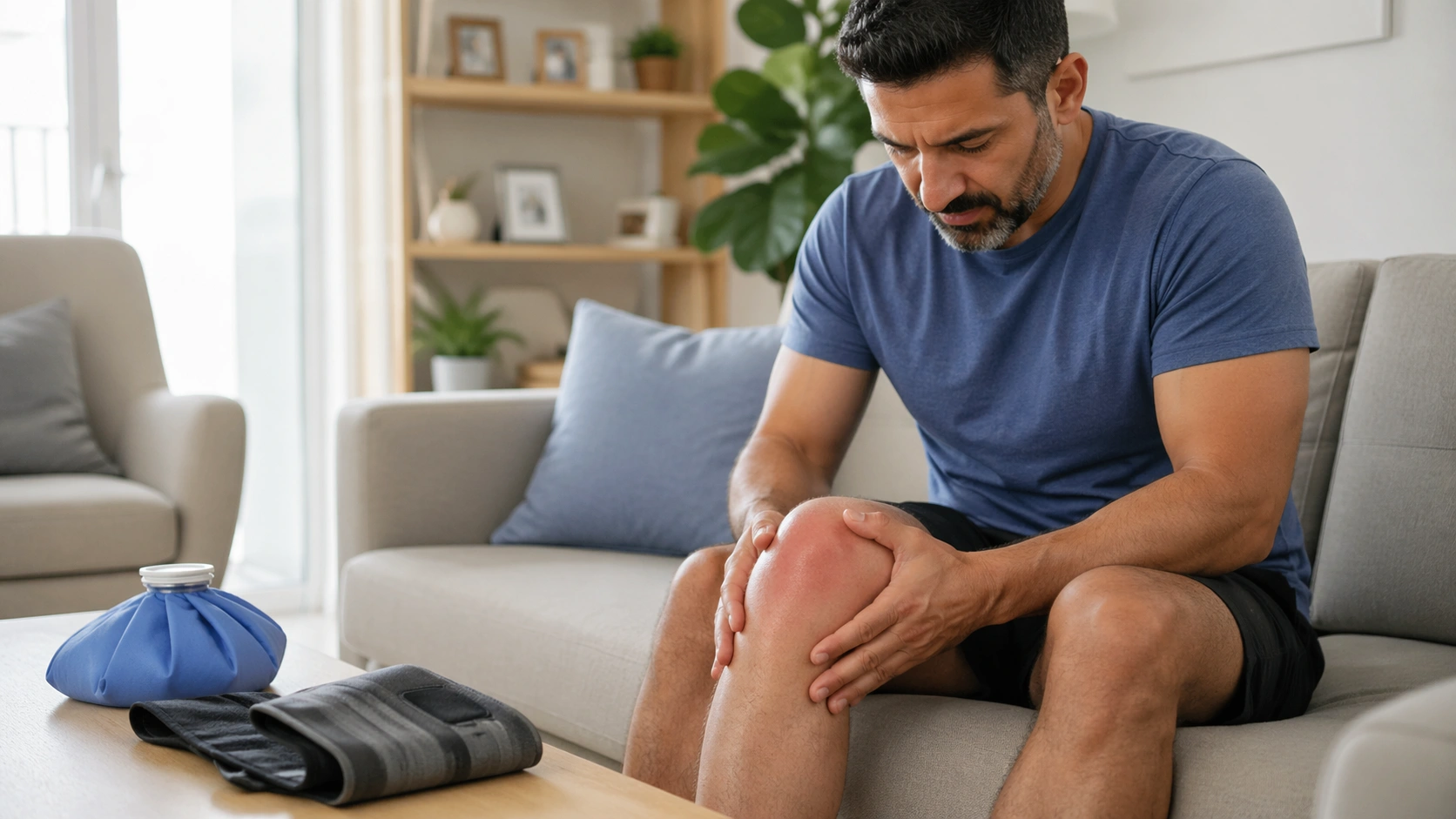
When the knee gets irritated, your body may send more fluid and inflammatory chemicals to the area. That is part of the protection process. The result can be visible puffiness, heat, pressure, and reduced comfort with movement.
You may also hear the term joint effusion. That simply means there is extra fluid in or around the joint. Some people call this water on the knee.
Why stiffness and limited mobility happen
Swelling takes up space. That extra pressure can make the knee feel hard to bend or straighten. The surrounding muscles may tighten up as a guarding response. That is why a swollen knee often feels stiff even when the original irritation is not severe.
How tight quads, calves, and hips can make the knee feel worse
In my experience, a lot of people focus only on the knee and ignore the tissue above and below it. Tight quads can pull harder on the kneecap area. Stiff calves can change walking mechanics. Limited hip mobility can push extra stress into the knee. That is why smart recovery usually looks at the full chain, not just one sore spot.
What to Do for a Swollen Knee at Home Step by Step
First 24 to 48 hours
- Reduce the activity that irritated it.
- Use ice for short sessions.
- Add light compression if it feels comfortable.
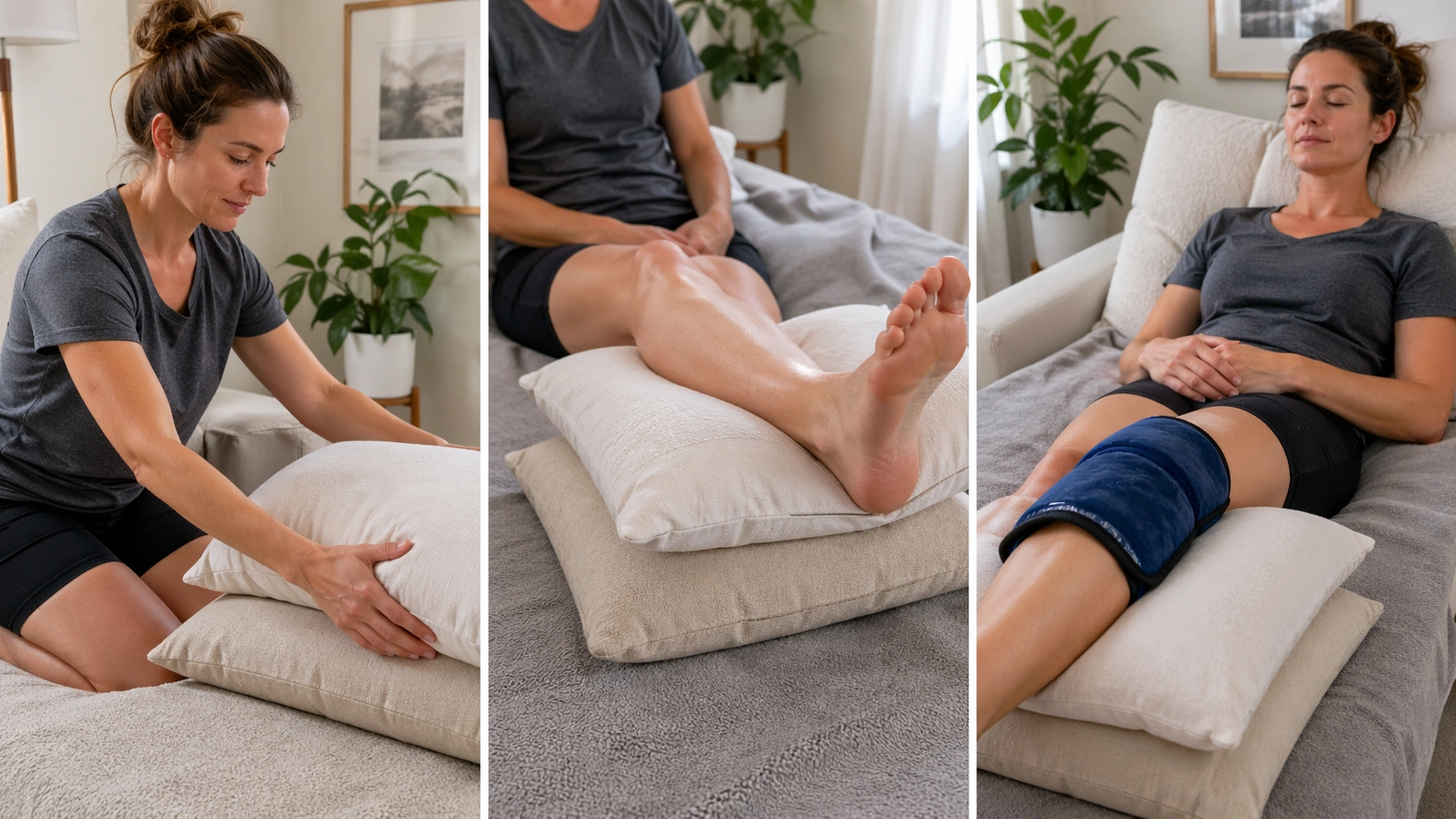
- Elevate the leg when resting.
- Avoid deep massage directly on the swollen area.
- Pay attention to whether it is improving, staying the same, or getting worse.
For many people, this simple approach works well early on. Healthline and Cleveland Clinic both note that rest, ice, and elevation are common starting points for mild knee swelling at home.
What to do after the swelling starts calming down
Once the heat and puffiness start easing, gentle movement often helps more than complete inactivity. I like simple knee bends within comfort, slow walking on flat ground, and light mobility for the hips and ankles. The goal is to keep blood flow moving without re-irritating the area.
When gentle movement helps
If your knee feels stiff after sitting, slow controlled movement may be more helpful than total rest. This is also when light recovery tools can make more sense, especially for the quads, calves, and hamstrings. Keep the pressure light and stay off the most swollen, hot, or sharply painful spot.
Symptom vs What May Help
| Symptom pattern | What it may suggest | What may help first |
|---|---|---|
| Swelling after a workout | Overuse, joint irritation, soft tissue stress | Rest, ice, elevation, scale back training |
| Swollen and stiff after sitting | Joint irritation plus muscle tightness | Gentle movement, light compression, mobility work |
| Warm, puffy knee after kneeling | Pressure irritation, possible bursitis pattern | Avoid kneeling, ice, padding, activity changes |
| Swelling after long walks or standing | Load sensitivity, poor recovery, joint overload | Compression, elevation, pacing, supportive footwear |
| Swelling with deeper stiffness on and off | Recurring joint irritation, possible arthritis pattern | Low-impact movement, compression, medical evaluation if it keeps returning |
Can Massage Help a Swollen Knee?
What may help
Massage can be useful, but timing and location matter. When the knee is actively swollen, I usually avoid aggressive work directly on the joint. What often helps more is gentle massage around the area: quads, hamstrings, calves, and sometimes the outer hip. That may help reduce tension, improve comfort, and support better movement.
What to avoid
- Do not use deep pressure on a hot, visibly swollen kneecap.
- Do not pound directly on the knee with a massage gun.
- Do not dig into sharp pain.
- Do not keep massaging if swelling increases afterward.
Safe self-massage routine around the knee
- Start with light strokes on the quads for 30 to 60 seconds.
- Move to the calves and hamstrings with gentle pressure.
- Use a foam roller lightly on the thighs if that feels good.
- Finish with easy knee bends and ankle pumps.
- Stop if the knee feels hotter, fuller, or more irritated.
If you want a more medical summary of causes and treatment options, Mayo Clinic’s swollen knee page is a helpful reference.
Best Uses and Benefits of Home Relief Tools
Ice
Ice is usually the best early option when the knee feels newly swollen, puffy, or warm. It may help calm irritation and make the joint feel less full.
Compression
A compression sleeve may help mild swelling feel more controlled during the day. It can also improve your sense of support while walking. Mayo Clinic notes that compressive knee sleeves can help control swelling in some knee bursitis cases.
Elevation
Elevation is simple but underrated. When I have people prop the leg up during rest, many notice less pressure and throbbing later in the day.
Foam rolling and light recovery work
These tools are best for the muscles around the knee, not for direct pressure on the swollen area. They often work well after the sharp irritation settles and stiffness becomes the bigger problem.
Common Problems and Fixes
Knee swells after walking
This usually means the joint is not tolerating that load well yet. Shorten your walks, reduce hills, use light compression, and rest with elevation later. Build back up slowly instead of forcing normal volume right away.
Knee feels tight after sitting
Try short movement breaks, a few gentle knee bends, ankle pumps, and easy leg stretches. The goal is to reduce stiffness without cranking on the joint.
Swelling returns after workouts
You may be returning too fast or loading the knee before it has calmed down. Lower impact, reduce volume, and focus on recovery between sessions. If it keeps returning, that is a sign to get the knee checked instead of repeating the same cycle.
Compression sleeve feels uncomfortable
If it leaves deep marks, causes numbness, or makes the knee throb more, it is likely too tight or worn too long. Compression should feel supportive, not restrictive.
Common Mistakes to Avoid
- Using heat too early when the knee is still actively swollen
- Massaging directly into a hot, irritated kneecap
- Jumping back into squats, running, or sports too fast
- Ignoring tight quads, calves, and hips
- Wearing a sleeve that is too tight
- Pushing through swelling that keeps increasing day after day
Safety Tips and When to Seek Care
Home care makes sense for many mild cases, but not every swollen knee should be handled like a simple recovery issue. Cleveland Clinic and Mayo Clinic both recommend prompt medical care if swelling follows trauma, if you cannot bear weight, if the knee looks deformed, if you cannot fully bend or straighten it, or if swelling comes with fever, marked redness, or severe pain.
- Get medical help quickly if the knee swelled suddenly after an injury.
- Do not rely on massage if the knee is hot, very red, or severely painful.
- See a clinician if swelling lasts more than a few days without improvement.
- Recurring swelling is a sign to stop guessing and get the joint evaluated.
For practical home-care ideas, this Healthline guide on reducing knee swelling can also be useful.
Helpful Tools That May Support Knee Swelling at Home
I do not think every swollen knee needs a product. But the right tool can make home care easier and more consistent, especially when used as support rather than as a miracle fix.
| Tool | Best for | What I like | Watch out for |
|---|---|---|---|
| Reusable knee ice pack wrap | Fresh swelling and warmth | Easy to use, targeted cold therapy | Do not overdo long sessions |
| Knee compression sleeve | Mild swelling during daily activity | Light support and better confidence | Avoid overly tight fit |
| Smooth foam roller | Quad and calf tension | Good for surrounding muscles | Do not roll directly on a hot swollen joint |
Reusable Knee Ice Pack Wrap
A simple option that may help calm fresh swelling and make the knee feel less hot and puffy after activity.
Knee Compression Sleeve
A good fit for mild swelling, light support, and daily movement when the knee feels a little unstable or full.
Ice Pack vs Compression Sleeve vs Massage Gun vs Foam Roller
| Option | Best for | When to use it | When to avoid it |
|---|---|---|---|
| Ice pack | Fresh swelling, heat, post-activity flare-ups | Early phase when the knee feels puffy or warm | If cold makes you feel worse or skin is irritated |
| Compression sleeve | Mild swelling, daily support | Walking, chores, light movement | If it feels too tight, causes numbness, or increases throbbing |
| Massage gun | Tight quads and calves after swelling settles | Around the knee, not on it | Directly on a hot, swollen, or sharply painful knee |
| Foam roller | Muscle stiffness, mobility work, recovery days | Quads, hamstrings, calves, outer hips | If deep pressure makes the knee more irritated |
FAQ
Why is my knee swollen but not bruised?
A swollen knee without bruising often points to irritation, overuse, arthritis, bursitis, or extra joint fluid rather than a direct impact injury.
Can walking make a swollen knee worse?
Yes, too much walking can keep irritated tissue inflamed, especially if the knee swelled after exercise, twisting, or long periods on your feet.
Should I use heat or ice on a swollen knee?
Ice is usually the better first choice for fresh swelling, while heat may feel better later if stiffness remains after the swelling calms down.
Is massage good for a swollen knee?
Gentle massage around the quads, hamstrings, and calves may help, but avoid deep pressure directly on a hot, swollen knee.
How long should knee swelling last?
Mild swelling from minor irritation may improve within a few days, but swelling that gets worse, returns often, or limits walking should be evaluated.
Can a compression sleeve help knee swelling?
A compression sleeve may help control mild swelling and improve support during daily activity, as long as it does not feel too tight.
Conclusion
If you are wondering why your knee is swollen, the most practical answer is that your knee is reacting to irritation, load, or inflammation. Start simple. Rest it. Ice it. Compress it lightly. Elevate it. Then add gentle movement when it settles.
If the swelling is severe, sudden, keeps coming back, or comes with major pain or trouble walking, get it checked. And if you want to support recovery at home, a good ice wrap or compression sleeve can make the basics easier without overcomplicating things.