In this guide, you will discover the vitamins that can help relieve muscle pain and promote recovery. Learn how to incorporate these essential nutrients into your diet for faster relief and improved muscle health.
Key Takeaways
- Vitamin D: Essential for muscle function and may help reduce muscle pain and inflammation.
- Vitamin C: Known for its antioxidant properties, it aids in collagen formation and helps reduce muscle soreness.
- Vitamin E: Acts as an antioxidant that can help protect muscle cells from damage and promotes recovery.
- B Vitamins: Important for energy production and may help reduce muscle fatigue and pain.
- Magnesium: Not a vitamin, but a crucial mineral that helps prevent muscle cramps and spasms.
- Hydration: Staying hydrated can enhance the efficacy of vitamins and aid in muscle recovery.
Discover What Vitamins Help Muscle Pain for Faster Relief
Muscle pain can be a frustrating experience, whether it’s due to exercise, injury, or chronic conditions. Fortunately, certain vitamins can help alleviate this discomfort and promote faster recovery. In this guide, you will learn about key vitamins, how they work, and how to incorporate them into your diet to relieve muscle pain effectively.
Understanding Muscle Pain
Muscle pain, also known as myalgia, can result from various factors, including overuse, strain, or underlying health conditions. Understanding the root cause of your muscle pain can help you choose the right vitamins and supplements to aid your recovery.

Visual guide about Discover What Vitamins Help Muscle Pain for Faster Relief
Image source: i.pinimg.com
Key Vitamins for Muscle Pain Relief
Several vitamins can contribute to muscle health and alleviate pain. Here’s a closer look at these essential nutrients:

Visual guide about Discover What Vitamins Help Muscle Pain for Faster Relief
Image source: cdn11.bigcommerce.com
1. Vitamin D
Vitamin D plays a critical role in muscle function. It helps regulate calcium levels in the muscles, which is crucial for muscle contraction and relaxation.
- How it helps: Vitamin D may reduce muscle pain and inflammation, making it essential for recovery.
- Sources: Sunlight exposure, fatty fish, fortified dairy products, and supplements.
2. Vitamin C
Vitamin C is well-known for its immune-boosting properties, but it also plays a vital role in muscle health.
- How it helps: Vitamin C aids in collagen production, which is essential for muscle tissue repair and may reduce soreness.
- Sources: Citrus fruits, strawberries, bell peppers, and broccoli.
3. Vitamin E
Vitamin E is a powerful antioxidant that helps protect muscle cells from damage.
- How it helps: By reducing oxidative stress, Vitamin E can promote faster recovery after workouts and alleviate muscle soreness.
- Sources: Nuts, seeds, spinach, and vegetable oils.
4. B Vitamins
The B vitamin family includes several vitamins that are vital for energy metabolism and muscle function.
- How it helps: B vitamins, particularly B1 (thiamine), B6, and B12, may reduce fatigue and muscle pain.
- Sources: Whole grains, meat, eggs, and dairy products.
5. Magnesium
While not a vitamin, magnesium is a crucial mineral for muscle function.
- How it helps: Magnesium helps prevent muscle cramps, spasms, and fatigue, making it essential for muscle health.
- Sources: Leafy greens, nuts, seeds, and whole grains.
Incorporating Vitamins into Your Diet
Now that you know which vitamins can help relieve muscle pain, the next step is to incorporate them into your daily diet.
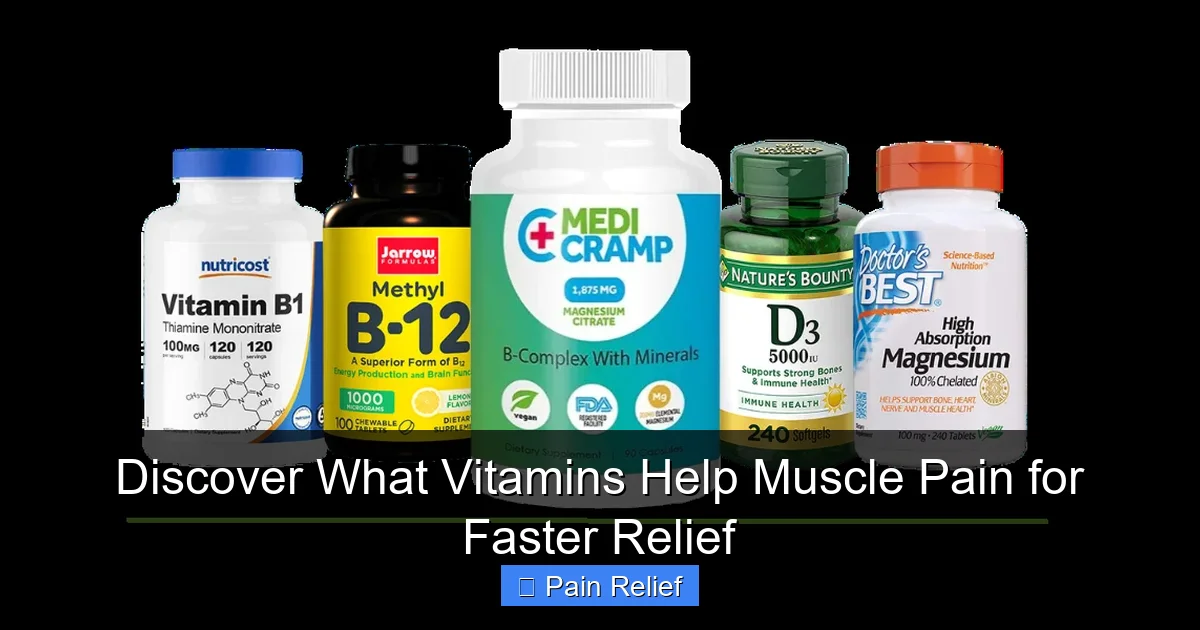
Visual guide about Discover What Vitamins Help Muscle Pain for Faster Relief
Image source: vitaminsformusclecramps.com
Step 1: Assess Your Current Diet
Start by evaluating your current diet. Are you consuming enough fruits, vegetables, and whole grains? Identifying gaps in your nutrition can help you focus on what you need.
Step 2: Plan Balanced Meals
To ensure you’re getting enough vitamins, plan balanced meals that include:
- Fruits and Vegetables: Aim for a variety of colors to maximize nutrient intake.
- Lean Proteins: Include sources like chicken, fish, tofu, and legumes for muscle repair.
- Whole Grains: Choose brown rice, quinoa, and whole wheat products for B vitamins.
Step 3: Consider Supplements
If you find it challenging to get enough vitamins through food alone, consider taking supplements. Consult with a healthcare professional to determine the right dosages and types of supplements for your needs.
Practical Tips for Muscle Pain Relief
In addition to vitamins, consider these practical tips to help alleviate muscle pain:
- Stay Hydrated: Drinking enough water is vital for muscle function and recovery.
- Rest and Recover: Allow your muscles time to heal, especially after intense workouts.
- Gentle Stretching: Incorporate stretching exercises to improve flexibility and reduce stiffness.
- Warm-Up and Cool Down: Always warm up before exercising and cool down afterward to prevent injuries.
Troubleshooting Muscle Pain
If you continue to experience muscle pain despite taking vitamins and following these tips, consider the following:
- Consult a Doctor: Persistent pain may indicate an underlying condition that requires professional evaluation.
- Assess Your Exercise Routine: Ensure you’re not over-training and that your exercises are suitable for your fitness level.
- Check for Nutritional Deficiencies: A healthcare professional can help identify any deficiencies that may contribute to muscle pain.
Conclusion
Muscle pain can hinder your daily activities and workout routines. By understanding the vitamins that help relieve muscle pain, you can take proactive steps towards recovery. Incorporating Vitamin D, C, E, B vitamins, and magnesium into your diet, along with practical lifestyle changes, can lead to significant improvements. Remember to consult with a healthcare professional if pain persists, and always prioritize a balanced diet for overall health and well-being.
🎥 Related Video: How to Relieve Muscle Soreness and Recover FAST (4 Science-Based Tips)
📺 Jeremy Ethier
Muscle soreness (also known as delayed onset muscle soreness or “DOMS”) is something we can all relate to. The sore legs and …